Paying for a $15,000 Roof in 2025: Every Option, Ranked Honestly

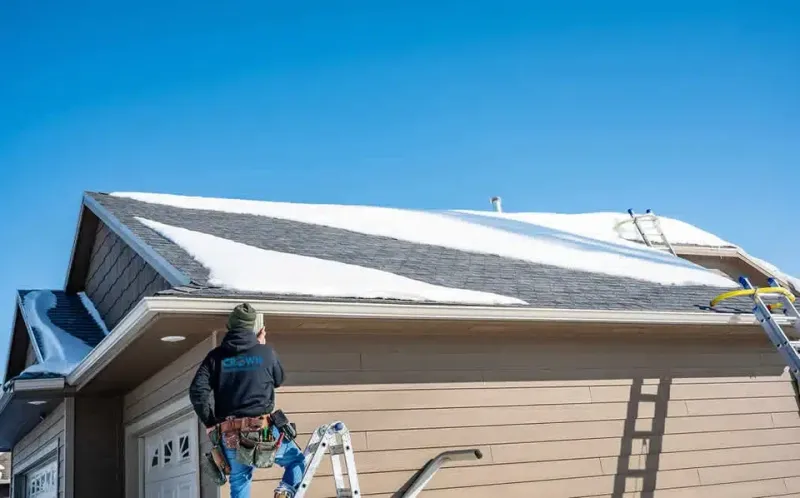
Photo: State Farm, CC BY 2.0, via Wikimedia Commons
Nobody budgets for a roof. It just shows up — usually right after a hailstorm, usually with a contractor standing in your driveway. And once the estimate lands at $15,000 (a realistic figure for a mid-sized asphalt replacement in most of the US right now), the question becomes: how do you pay for it?
We've watched homeowners navigate this a thousand times. Here's the honest breakdown.
Option 1: Cash or Savings
The unglamorous champion. Paying outright means zero interest, zero monthly obligations, and often a slight negotiating edge — contractors value jobs that won't fall through at the funding stage.
The catch: most people don't have $15,000 liquid, and draining an emergency fund for a roof leaves you exposed when the water heater quits the following month.
Option 2: Contractor Financing
Nearly every established roofing company offers financing through a third-party lender. Terms in 2025 typically run 5 to 15 years, with promotional offers like "no interest if paid in 12 months" or fixed APRs from roughly 7% to 15% depending on credit.
Let's run the numbers on our $15,000 job:
- 10 years at 8.99% APR: about $193/month, roughly $8,200 in total interest.
- 5 years at 9.99% APR: about $318/month, roughly $4,100 in total interest.
The shorter term nearly halves your interest cost. If the monthly payment is workable, take it.
Watch for: deferred-interest promos. If you miss the payoff window by a single day, interest is often retroactively applied to the full original balance. Read the fine print twice.
Option 3: HELOC or Home Equity Loan
If you've built equity, a HELOC typically beats contractor financing on rate — often in the 7% to 9% range for well-qualified borrowers in 2025, and the interest may be tax-deductible if the funds improve the home (a roof replacement generally qualifies, though confirm with your tax pro).
A $15,000 HELOC draw at 8% over 10 years runs about $182/month. Comparable payment, but you're putting your house up as collateral — miss payments and the consequences are far more serious than a collections call.
Best for: homeowners with strong equity and stable income who can stomach the collateral risk for the lower rate.
Option 4: Insurance
If the damage came from hail, wind, or a fallen tree, this is where you start — not financing. A typical homeowners policy covers storm damage minus your deductible. On a $15,000 claim with a $2,500 deductible, you're financing $12,500 or less.
But know the current landscape: many insurers have moved to actual-cash-value (ACV) roof policies in hail-prone states like Texas, Oklahoma, and Colorado, which subtract depreciation. On a 10-year-old roof, that could leave you covering $6,000+ out of pocket. Check your declarations page before the storm season, not after.
The Offers to Avoid
This is the part we feel strongly about. Storm-chasing crews — the ones who show up after every hail event — sometimes push financing that should make you walk:
- "No credit check" loans. These exist, and they're almost always brutal: 25%+ APRs, massive origination fees, or both.
- "We'll cover your deductible!" That's insurance fraud in most states, plain and simple, and it usually means the invoice is inflated to make up the difference.
- Pressure to sign financing on the spot. Any legitimate lender gives you days to review terms. A contractor who needs your signature before leaving your driveway is telling you something.
- Assignment of benefits paperwork. Signing over your insurance claim rights strips you of control. Several states have restricted this practice for good reason.
Our Ranking, Bluntly
- Insurance payout + savings for the deductible — if the damage qualifies.
- Cash, if you have it and can keep a cushion.
- HELOC, for equity-rich homeowners who want the lowest rate.
- Contractor financing with a short term — perfectly reasonable, just skip the deferred-interest games.
- Anything with "no credit check" in the pitch. Hard no.
One last thing: get at least three estimates before you finance anything. The cheapest way to afford a $15,000 roof is making sure it's actually a $15,000 roof — and not a $12,000 one wearing a markup.