The Invisible Half of Your Roof: Why Attic Airflow Belongs on Every Inspection List

Photo: attic ventilation soffit ridge vent roof inspection shingles, via i.ytimg.com
When people picture a roof, they usually picture the part that faces the sky: shingles, flashing, maybe a ridge line. Fair enough. That is the part you see from the driveway. But a roof is a system, and one of its most important working parts is the attic underneath it. If that attic cannot breathe, the shingles above it take the heat — literally.
At 10 Stars Roofing, we have walked into plenty of attics that looked fine at first glance but were quietly cooking the roof from below. The homeowner called about curling shingles or a hot second floor. The real issue was not always the shingle brand or the installer. Sometimes it was airflow.
What Attic Ventilation Actually Does
Attic ventilation is not about making the attic comfortable for storage boxes. It is about moving heat and moisture out before they cause trouble. A balanced system has two parts: intake and exhaust. Intake vents, usually in the soffits, let cooler outside air into the attic. Exhaust vents, often at the ridge or near the roof peak, let hot, moist air escape.
When those two sides work together, the attic stays closer to outdoor temperatures. When they do not, heat builds up. In summer, that trapped heat radiates down into the living space and up into the roof deck. Your air conditioner works harder, and your shingles age from the underside as well as the top.
Signs Your Attic Is Not Breathing
Ventilation problems rarely announce themselves with a flashing red light. They show up as patterns. Here are the clues we ask homeowners to watch for:
- Shingles that curl, crack, or look prematurely worn, especially on south- and west-facing slopes.
- Attic temperatures that feel dramatically hotter than the outdoor air in summer.
- Condensation on rafters, sheathing, or HVAC ducts in colder months.
- Musty odors or signs of mold growth in the attic.
- Ice dams along the eaves in winter.
- Second-floor rooms that never seem to cool down, no matter what the thermostat says.
- Loose or stained insulation, which can happen when moisture or heat is not moving out properly.
None of these automatically means ventilation is the only problem. Roof age, insulation, ductwork, and house design all matter. But they are good reasons to look deeper before spending money on a replacement.
The Balance Problem: Too Much of One, Not Enough of the Other
One of the most common mistakes we see is exhaust without matching intake. A roofer adds a ridge vent, but the soffit vents are blocked, painted over, or missing. Or the attic has plenty of soffit vents but no clear exhaust path at the top. Either way, the system is lopsided.
Another frequent issue is insulation blocking the soffit vents. It is an easy thing to miss. Blown-in insulation gets pushed toward the eaves, or a well-meaning homeowner stuffs a batt into a gap to stop a draft. Suddenly the intake side is closed for business. Baffles — those simple channels that keep insulation away from the vent opening — are not glamorous, but they matter.
We also see vents installed in the wrong spots, exhaust fans dumping moist air into the attic instead of outside, and ridge vents installed on roofs with little or no intake to feed them. Each of those choices can undermine an otherwise solid roof job.
Why This Matters Before a Roof Replacement
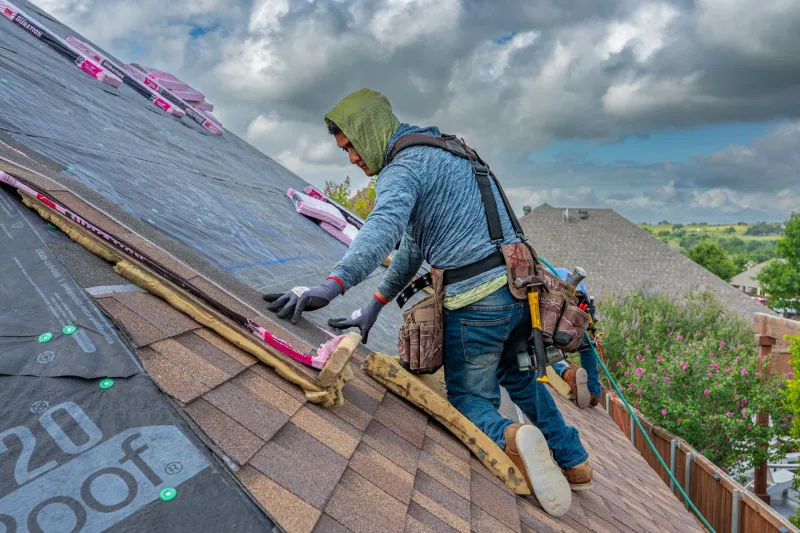
If you are planning a roof replacement, ventilation deserves a real conversation before the first shingle comes off. A new roof over an attic that cannot breathe is still a roof under stress. The shingles may be top-quality, the installation may be clean, and the workmanship warranty may be solid — but the system is working against itself.
That is why a thorough inspection should include the attic, not just the roof surface. We want to see the soffit vents, the ridge or roof vents, the insulation line, and any signs of moisture or heat damage. If changes are needed, it is far easier to address them during a replacement than to retrofit later.
Questions to Ask Your Roofer
You do not need to become an ventilation engineer overnight. You do need to ask a few direct questions:
- How are you calculating the intake and exhaust needs for this attic?
- Are the soffit vents open and clear, and will baffles be installed where needed?
- What kind of exhaust vent is on the roof now, and does it match the intake?
- Will you inspect the attic for moisture, insulation problems, or blocked airflow?
- If ventilation changes are recommended, are they included in the estimate or listed separately?
A good roofer should be able to explain the plan in plain language. If ventilation is waved off as unimportant, that is worth noticing.
The Energy Bill Connection
Attic ventilation is not a magic bullet for high cooling costs. Windows, insulation, duct sealing, and HVAC efficiency all play a role. But a hot, stagnant attic can make your air conditioner work harder than it should. When airflow improves, the attic sheds heat more effectively, and the living space below can feel more manageable during a US summer.
The payoff is not always dramatic or instant. It is more like removing a quiet drag on the system. That is one reason we treat ventilation as part of roof maintenance, not an optional add-on.
The Takeaway
Your roof is more than the shingles. It is the deck, the underlayment, the flashing, the vents, and the attic below. When all of those pieces work together, the roof has a better chance of reaching its expected service life. When the attic is sealed up and overheating, even a five-star roof can be asked to do a job it was never meant to do alone.
Before your next repair or replacement, ask for an attic check. It is one of the least visible parts of the job — and one of the most important.