The Calm Homeowner's Guide to Roof Replacement Day: Noise, Nails, and Knowing When to Speak Up

Most homeowners do not need a roof replaced often enough to remember how the day actually goes. That is why the whole thing can feel like a small mystery: a dumpster appears, people walk on the roof, hammers bang, and by dinner the house looks different. The good news is that a standard asphalt shingle replacement is not chaos. It is a sequence. Once you know the sequence, you can plan around it, protect your pets and plants, and even find the right moments to ask questions without slowing anyone down.
Here is the calm homeowner's play-by-play for a typical one- to two-day replacement. Larger homes, steep pitches, or complicated rooflines can stretch the schedule, but the order of events usually looks the same.
The Evening Before: Clear the Runway
The night before is about access and expectations. Move cars out of the driveway and away from the drop zone. If you have a garage, make sure the crew can get equipment past it. Put patio furniture, grills, and kids' toys somewhere safe, and give the landscaping a little breathing room — tarps and falling debris are part of the deal, and even careful crews can bend a shrub.
Inside the house, close windows and cover anything in the attic you care about. Shingle dust has a way of finding its way into small spaces. If you have pets, make a plan for a quieter room or a day at a friend's house, especially during tear-off. It is also a good time to let neighbors know what is coming. A five-minute heads-up about noise and the dumpster goes a long way.
Early Morning: The Dumpster and the Staging
The dumpster usually lands before the crew starts. The driver will want a clear spot on the driveway or street, depending on local rules and your HOA. The crew will stage materials, tarps, and tools, then do a quick walkaround with you if you are available. This is one of the best moments to ask big-picture questions: what time they expect to start, where the porta-potty will go, whether they need water or power access, and how they will protect the siding and windows.
At 10 Stars Roofing, this is also when we confirm the scope and the day's plan with the homeowner. A good crew wants you to know what is happening before the first shingle moves.
Mid-Morning: Tear-Off and Peak Noise
Once the tear-off starts, the house gets loud. Really loud. Nails pop, shingles scrape, and debris slides down chutes into the dumpster. This is often the noisiest part of the project, and it can last a few hours depending on the size of the roof. If you work from home, schedule calls around it. If you have a baby or a pet who hates thunder, this is the day for the basement or the quiet side of the house.
The crew will lay tarps around the perimeter to catch debris, but it is still smart to keep kids and pets away from the work zone. Do not stand under the eaves or walk close to the dumpster. Curiosity is natural; a falling nail is not a souvenir you want.
Late Morning: The Decking Reveal
Under the old shingles is the roof deck. The crew will inspect it for soft spots, rot, and damage that was hidden from view. This is the moment when a replacement can grow a little — and it is a legitimate one. If the decking needs repairs, a good contractor will show you photos, explain the cost, and get approval before proceeding. Ask questions here. This is the right time to understand what was found and why it matters.
It is also a good moment to ask about ice and water shield, underlayment, and flashing details if you have been curious. Those layers are going down now, and they are the parts of the roof you will never see again.
Early Afternoon: Dry-In and Details
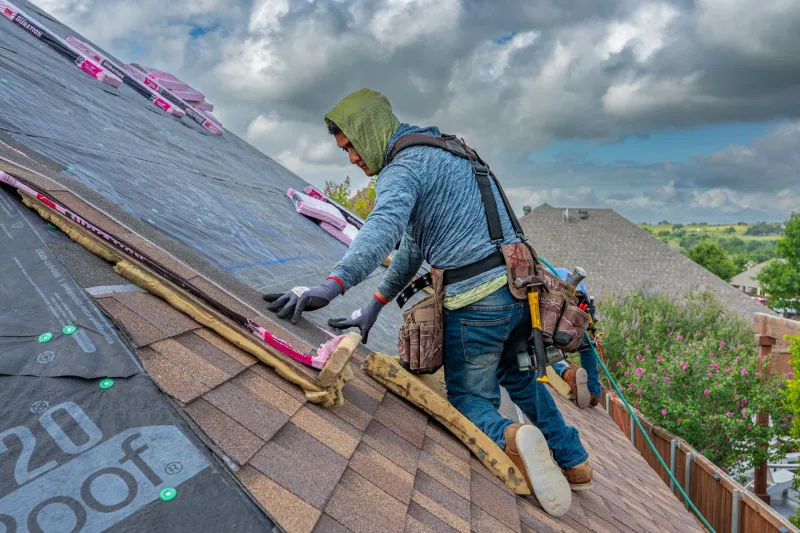
Before shingles go on, the roof needs to be protected. Underlayment, drip edge, valley flashing, and pipe boots are installed in a specific order. If you see the crew working around chimneys or skylights, that is normal. These details are where water usually finds a way in, so a crew that takes its time here is doing you a favor. Ask the foreman how they handle flashing at the chimney or in the valleys if you want to understand the roof's weak points. Just keep it brief and avoid climbing up for a closer look.
Late Afternoon: Shingles Go On
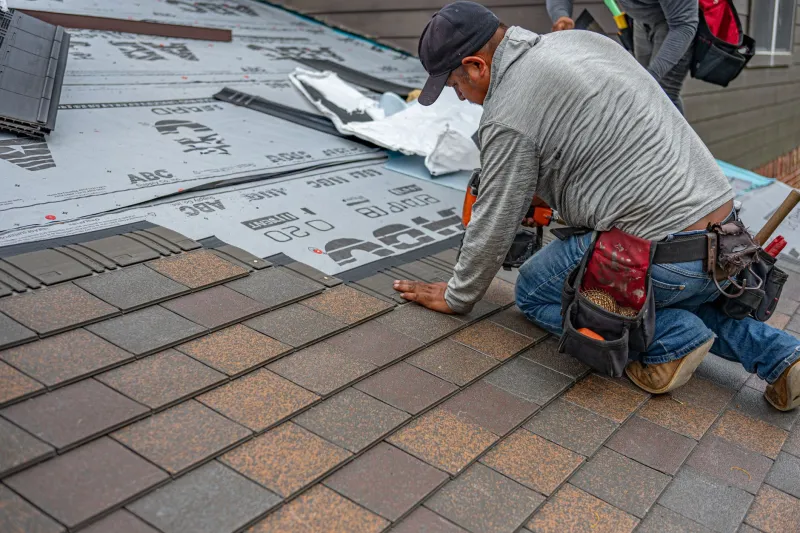
This is the most visible progress of the day. Rows of shingles start covering the underlayment, and the roof begins to look like a roof again. Noise continues, but the pace changes. The crew is focused on alignment, nailing pattern, and keeping the lines straight. This is not the best time for a long conversation — save detailed questions for a break or the end of the day.
Day Two (or Late Day One): Ridge, Vents, and Trim
On a typical house, the install can wrap up in one long day or spill into a second morning. The final pieces are the ridge cap, ridge vent, and any remaining trim or flashing. These are the finishing moves. If your contract includes a ridge vent or a specific ventilation upgrade, this is when you will see it go on.
The Final Sweep: Magnets, Gutters, and the Walkthrough
A roof replacement is not done when the last shingle is nailed. The crew will clean the gutters, pick up debris, and run a magnetic sweep over the driveway, lawn, and walkways to catch stray nails. That magnetic sweep is one of the small details that separates a professional job from a rushed one. Do your own visual pass afterward, especially in the grass and along the edges of the driveway.
The foreman should walk the property with you, show you the finished roof, and explain what was done. This is the right time to ask about warranty paperwork, payment, and anything that looks off. A five-star crew expects that conversation and wants you to feel good about the result.
When to Speak Up — and When to Wait
Ask early about access, pets, and the day's plan. Ask during the decking inspection about any hidden damage. Ask at the walkthrough about warranties and cleanup. Avoid interrupting the crew during tear-off or the middle of a shingle run. If something urgent comes up — a safety concern, a broken window, a pet escape — find the foreman. Otherwise, keep a running list on your phone and bring it up at a natural break.
A roof replacement will never be silent, but it can be predictable. Clear the driveway, protect the pets, ask the right questions at the right moments, and let the crew do the loud part. That is how a stressful construction day turns into a straightforward home upgrade.