Clip Marks and Lifted Tabs: The Holiday-Light Damage That Won't Show Until March
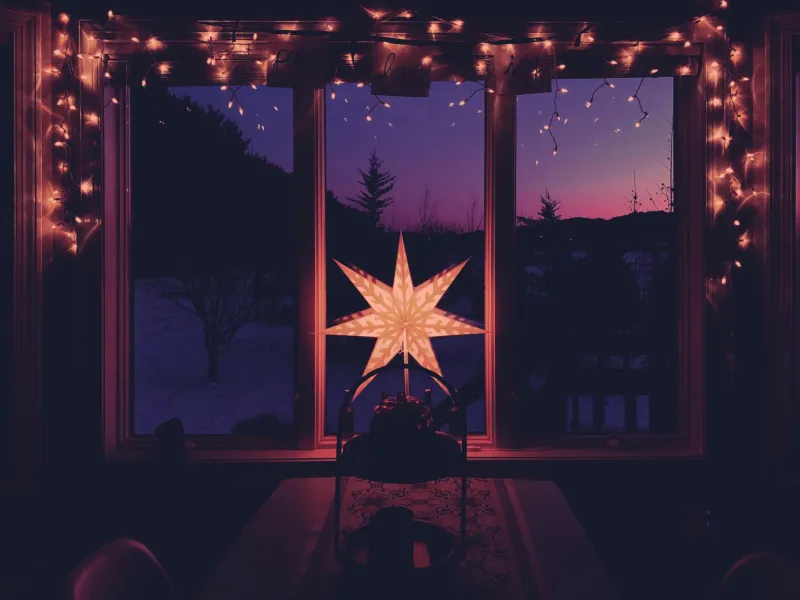
Every November, the same thing happens on block after block: ladders come out, extension cords get untangled in the driveway, and somebody's roof quietly takes a beating that won't announce itself until the first thaw. Holiday lights are supposed to be the easy part of the season. The damage they leave behind is usually anything but.
We see it every spring at 10 Stars Roofing — homeowners pointing at a ceiling stain or a loose shingle, convinced a winter storm did it, when the real culprit was a clip, a staple, or a ladder foot back in December. Here's what's actually going on up there, and how to decorate without handing yourself a repair.
The Three Injuries Nobody Notices in December
Most holiday-light roof damage falls into three buckets, and all of them are invisible from the ground.
Clip marks and lifted tabs. Plastic gutter clips and all-in-one light clips are marketed as roof-safe, and most of them are — when they're used on the right surface. The problem is the pressure point. A clip that pinches the edge of a shingle tab can lift the self-sealing strip just enough that wind gets underneath. One lifted tab is a cosmetic nuisance. A dozen across a windward slope is an invitation for water to work its way in.
Granule scuffing. Asphalt shingles are coated in mineral granules that do the actual work of blocking UV. Dragging a ladder up over the eave, or walking a slope in work boots, scrapes those granules off in streaks. Those bald paths age faster, hold more heat, and are the first place you'll see curling in a few years.
Fastener holes. Staples, roofing nails, and screw-in hooks punch through the shingle mat. Each hole is small. Each hole is also permanent, and the seal around it depends entirely on whether the shingle was warm enough to close back up — which in late November it usually isn't.
Cold Shingles Are Not Forgiving
Here's the piece homeowners miss: asphalt shingles get brittle in cold weather. The self-sealing adhesive strip that bonds each tab down needs warmth and sun to activate properly — the same reason roofers avoid installing shingles in freezing conditions. Below roughly 40°F, that strip isn't doing much.
So when you lift a tab to slide a clip under it in December, you're bending a stiff shingle and asking a dormant adhesive to seal it back down. It might. It might not. And nobody's going up there in January to check.
That's the setup for a spring leak: a slightly raised tab, a few freeze-thaw cycles, a driving rain from the right direction, and water finding a path it wouldn't have found otherwise.
The Warranty Sentence You Probably Haven't Read
Most manufacturer warranties — and most workmanship warranties, honestly — include language about improper fastening, unauthorized penetrations, and foot traffic. Those clauses exist for a reason, and a staple gun full of light clips is exactly the kind of thing that gets a claim questioned.
We're not saying your warranty is void the moment you hang a wreath. We're saying this: if a leak shows up two springs from now near a line of staple holes, don't be surprised when the conversation gets complicated. A $6 box of adhesive-backed clips is a lot cheaper than that conversation.
Gutters Are the Quiet Victim
Light strands strung along a gutter edge look great. They also catch leaves, twigs, and shingle grit — and once they're anchored in place, most people stop cleaning that stretch of gutter entirely.
A clogged gutter in December becomes an ice dam in January. Water backs up under the eave, finds the fascia, and works its way toward your ceiling. By the time you see the stain, the lights are long gone and the cause isn't obvious.
If you're hanging lights on the gutter, plan on clearing that section at takedown. Not in April. At takedown.
Ladder Placement Is a Ten-Minute Decision With a Ten-Year Tail
Most ladder damage isn't dramatic. It's a crushed gutter edge, a bent hanger, or two divots where the feet pressed into a shingle course.
- Never lean the ladder directly against the gutter. Use a standoff stabilizer so the weight sits on the wall, not the gutter lip.
- Keep the feet on solid, level ground. A 3-inch settle on soft winter turf is enough to send the whole thing sideways.
- Avoid walking the slope at all if you can. If you must, stay off the valleys and the ridge, and wear soft-soled shoes.
- Skip the roof entirely when it's wet, frosty, or below freezing. No light display is worth a fall.
A Takedown Calendar That Saves You a Spring Repair
Lights left up into March aren't just a neighborhood aesthetic debate. Sun degrades the cord insulation, wind whips loose strands against the shingles, and every gust grinds plastic against granules.
Aim to pull everything down within two weeks of New Year's, on a dry day above freezing. While you're up there, do a five-minute walkaround from the ground: look for lifted tabs, curled edges, and any spot where a clip sat. Grab a photo of anything that looks off. If something's questionable, that's a good time to schedule an inspection — while the weather's mild and before spring rains start probing every weakness.
When to Call It In
Most holiday-light wear is cosmetic. A few things aren't, and they're worth a professional look:
- Tabs that stay lifted after a warm, sunny day
- Any visible puncture line along a light run
- Gutter sections that sag or pull away from the fascia
- Granule loss in streaks, especially on a south-facing slope
- A ceiling stain, no matter how small, in the room below
At 10 Stars Roofing, an inspection is the cheapest part of the whole equation — a couple hundred dollars that can save you thousands in water damage and interior repair. We'd rather tell you your roof is fine than find out in April that it wasn't.
Hang the lights. Enjoy the season. Just put them up the way you'd want them taken down — carefully, and without leaving anything behind that your roof has to live with.