When the Limb Lands: Trees, Roofs, and the Honest Answer to "Who Pays?"
Photo: USFWS Midwest Region from United States, CC BY 2.0, via Wikimedia Commons
There's a particular sound a big limb makes when it lets go — a crack, a long scrape, then a thud you feel in your teeth. If you've heard it, you already know the next hour is a blur of flashlights and phone calls. If you haven't, this is the article worth reading on a quiet afternoon, because the tree question is mostly answered long before the tree falls.
Your Tree, Your Roof, Your Claim (Usually)
Start with the blunt version: if the tree is on your property and it drops a limb on your house, the repair is typically your homeowner's policy's job, not your neighbor's and not the tree's. Standard US policies cover sudden, accidental damage from falling objects, and a wind-thrown branch usually lands squarely in that bucket. Your deductible applies, and it applies per claim — so a $1,000 deductible against a $900 repair means you're writing the check yourself.
You'll hear people say "act of God" like it's a clause. It isn't one you'll find in most policies. Insurers work from named perils and exclusions, not theology. Wind, ice, and the weight of a snow-loaded limb are generally covered perils; neglect and deferred maintenance are the things that get a claim denied.
The Neighbor's Tree Is a Different Conversation
If the branch came from the oak across the fence, don't assume the neighbor is paying. In most states, a healthy tree that fails in a storm is considered that property owner's problem only in the sense that it's nobody's fault. Your policy handles your roof; your insurer may then decide whether to pursue the neighbor's insurer behind the scenes.
What changes the math is notice. If a neighbor has been told, in writing, that a tree is dead, diseased, or leaning suspiciously over your roofline, and they do nothing, their responsibility gets much harder to wave away. A short, polite letter — dated, photographed, and kept — is cheap insurance against a very expensive argument. That letter is also why arborist reports matter more than vibes.
What a Claim Actually Pays For
Coverage for the roof itself is the headline, but homeowners are routinely surprised by the footnotes:
- Debris removal is often covered, but frequently capped — commonly somewhere in the $500 to $1,000 per tree range and a few thousand total. Check your declarations page before you rent the biggest chipper on the lot.
- The tree itself is almost never covered. Landscaping is not the house.
- Interior damage from the resulting leak is usually part of the same claim, which is why you photograph the wet ceiling, not just the hole.
- Older roofs may be settled at actual cash value rather than replacement cost, which can sting. Ask specifically about recoverable depreciation and what triggers the second check.
- Emergency tarping is often reimbursable, but keep the receipt and take a photo of the tarp before the next rain.
One more thing: don't let a crew start permanent repairs before the adjuster sees the damage. Temporary stabilization is fine and usually encouraged. A brand-new deck of shingles is not.
The Boring Work That Prevents the Phone Call
An arborist we work with likes to say that most storm damage is a maintenance story with a dramatic ending. The practical version:
- Prune on a cycle, not a panic. Most mature shade trees want attention every three to five years. Remove deadwood, thin crowded crotches, and keep at least a few feet of clearance between branches and the roof plane.
- Know your risky species. Silver maples, willows, and cottonwoods shed limbs with enthusiasm. So do trees with included bark — the tight V-shaped unions where two trunks fight for the same space.
- Watch for lean, fungus, and hollow spots. Conks on the trunk, sawdust at the base, and sudden leaf drop in July are all worth a professional look.
- Hire a certified arborist, not a guy with a chainsaw and a ladder. ISA certification is the credential to ask about. Ask for proof of insurance, too — a climber who gets hurt on your property is a different headache entirely.
Roofer or Arborist First?
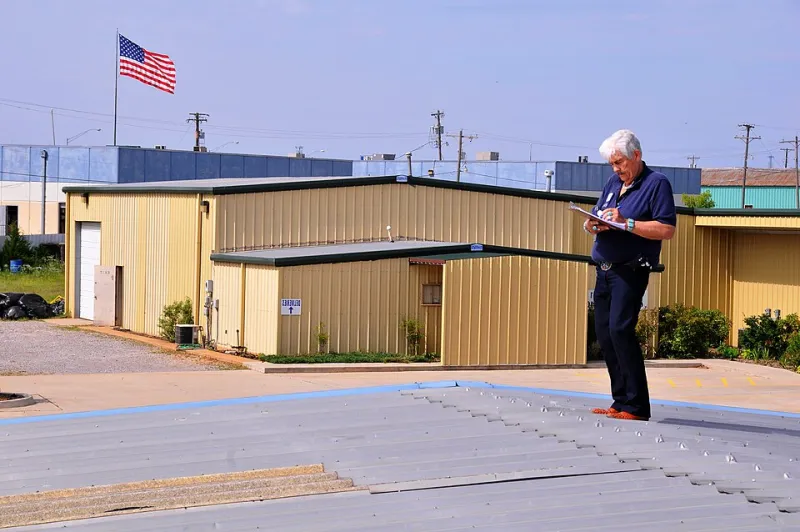
This one has a clean answer. If a limb is still hung up in the canopy or the tree is unstable, the arborist goes first — nobody should be walking a roof under a suspended branch. Once the tree is stable, the roofer evaluates the shingles, decking, flashing, and any hidden moisture. A roofer can tell you whether the deck is compromised; an arborist can tell you whether the rest of the tree is coming down next week. Neither should be doing the other's job, and a company that offers both without separate credentials is worth a second look.
If the limb only grazed the roof, don't assume you're fine because the shingles look okay from the driveway. Bruised shingles and lifted flashing often leak months later, and by then the storm date is a memory the adjuster can't verify. A quick inspection in 2026 costs far less than a ceiling repair in 2027.
Build the Paper Trail Before You Need It
Minutes matter after a storm, so do the prep work now:
- Photograph every roof slope and the trees near them each spring. Dated photos settle a lot of arguments.
- Keep receipts and arborist invoices. They prove the tree was maintained, which protects your claim.
- Save your policy number, deductible, and your insurer's claims line somewhere you can find it without Wi-Fi.
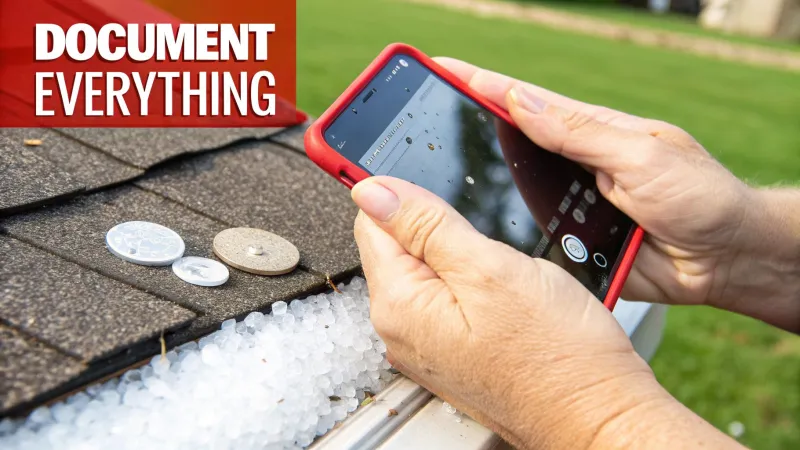
- After damage, shoot wide, medium, and close-up photos before anything is moved. Then photograph the tarp, the receipts, and the contractor's written scope.
- Get two local estimates and keep both. Insurers don't require the cheapest bid, but they do like documentation.
A tree over your house isn't a liability problem so much as a relationship you maintain. Prune it, document it, insure it, and the branch that eventually comes down is an inconvenience instead of a fight. And if one does come down, call the arborist for the tree, the roofer for the roof, and your insurer before anyone swings a hammer.