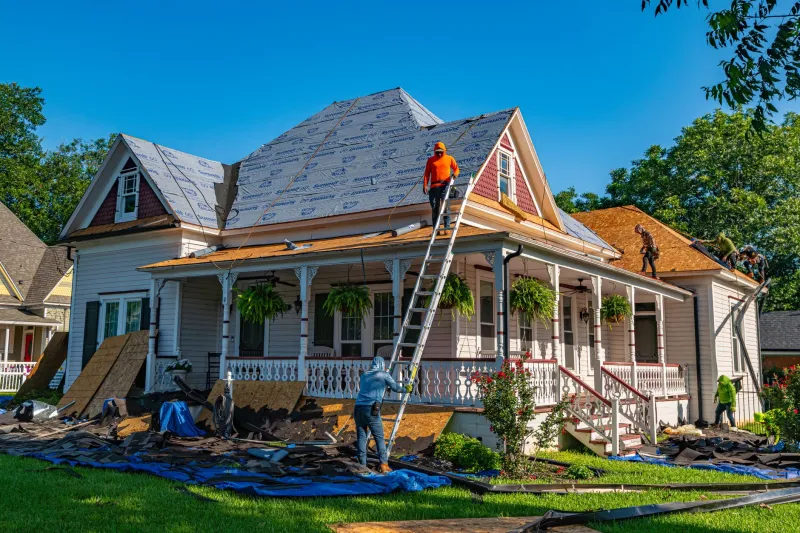
The Crew Behind the Shingles: How to Find Out Who's Really Swinging the Hammer
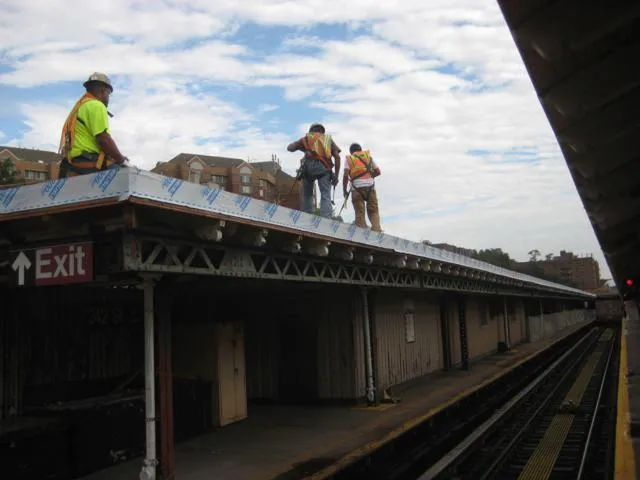
Photo: Metropolitan Transportation Authority of the State of New York, CC BY 2.0, via Wikimedia Commons
When you hire a roofing company, you usually meet one person: the salesperson. They sit at your kitchen table, spread out shingle samples, and talk about warranties. What they rarely volunteer is the name of the person who will actually be standing on your roof at 7 a.m. That question matters more than most homeowners realize.
A five-star roof is not just a pile of good materials. It is a sequence of small decisions made by people with training, supervision, and accountability. So before you sign a contract, it is fair to ask who is really swinging the hammer.
The Person in Your Kitchen Is Not the Person on Your Roof
Roofing companies sell with one team and build with another. That is normal. The problem is when nobody explains the handoff. You might meet a polished estimator, then watch an unfamiliar crew pull up in an unmarked truck. If you cannot connect the person selling the job to the people doing the work, you have lost a layer of accountability.
This is not about being suspicious of every crew. It is about knowing who is responsible when a nail misses the rafters, a vent is flashed wrong, or a cleanup magnet rolls past a shingle tab in the grass.
Employee Crews vs. Subcontractors: The Difference You Can Feel
Some roofing companies use employee crews. Those workers are on the company payroll, trained under the company's standards, and supervised by someone the company can promote or replace. Other companies subcontract the install to independent crews. That is not automatically bad. Many excellent roofers work as subcontractors.
The difference shows up in control. With an employee crew, the company usually has more say over training, safety, scheduling, and quality checks. With subcontractors, the company is one step removed. The job can still be excellent, but the vetting burden shifts. You want to know that the roofing company has actually vetted the crew, not just handed off your address.
Ask directly: Are the people on my roof employees or subcontractors? If they are subcontractors, who supervises them, and what is that supervisor's name? A straight answer is a good sign. A defensive answer is information too.
Four Questions to Ask Before You Sign Anything
You do not need to interrogate anyone. You just need plain answers to four plain questions.
- Who will be on site each day, and how many workers should I expect?
- Are those workers employees of your company or subcontractors?
- Who is the on-site supervisor, and will that person be here for the whole job?
- Can you provide a certificate of insurance for the crew, and can I be named as an additional insured?
That last question is not a technicality. It is your protection. If a worker is injured on your property, or a ladder damages a neighbor's fence, you want a clear insurance trail. A certificate of insurance, often called a COI, should show general liability and workers' compensation coverage. Ask the company to have its insurance agent send the certificate directly to you. A PDF from a salesperson is a start. A verification call to the insurer is better.
The Estimate Is a Paper Trail
A detailed estimate tells you what you are paying for. A vague one tells you what you are hoping for. Look for line items that cover labor, dumpster rental, permits, underlayment, flashing, ventilation, and supervision. If the estimate simply says 'roof replacement' with one number, ask for a breakdown.
Be cautious of a bid that is thousands of dollars below the others without a clear reason. Sometimes a lower price means lower overhead. Sometimes it means skipped underlayment, a crew paid by the square with no quality check, or a subcontractor who will disappear when the final walkthrough is due. Cheap is not a crime, but unexplained cheap deserves a question.
Also read the payment schedule. A large deposit before materials arrive is a red flag in many states. So is a contract with no physical business address, no license number where required, and no written scope of work. The estimate should name the crew model, the supervision plan, and the cleanup expectations. If it does not, ask them to add it.
Insurance and Supervision: The Two Non-Negotiables
Insurance protects you from financial fallout. Supervision protects you from workmanship problems. You want both.
A company that uses subcontractors should be able to show you each sub's certificate of insurance. The company should also explain who checks the work. Is there a project manager who visits daily? Does the salesperson come back for a final inspection, or do they vanish after the deposit? Who handles a punch list if a ridge cap is loose or a gutter is dented?
Supervision is especially important on steep roofs, older homes, and jobs with complex flashing. A crew can be skilled and still miss a detail that a supervisor would catch. The best roofing companies treat supervision as part of the job, not an extra cost.
Red Flags That Show Up Before the Dumpster Does
You do not need a private investigator. You need patterns.
Watch for a company that cannot name a supervisor, dodges the employee-versus-subcontractor question, or pressures you to sign the same day. Be wary of a crew that shows up with no company signage, no supervisor, and no safety equipment. An unmarked truck alone is not proof of a problem, but it becomes meaningful when paired with vague paperwork and a cash-only deposit.
Also listen for the phrase 'we use only the best crews.' It sounds reassuring, but it is not an answer. The best crews have names, training, insurance, and someone checking their work. Ask for those details.
What a Five-Star Job Looks Like on Day One
On a well-run job, the supervisor introduces the crew, walks the property, and notes what will be protected. Landscaping gets covered. Driveways get a dumpster board. The homeowner gets a clear contact for questions. At the end of each day, nails get swept and magnets get run. The supervisor checks the decking before the shingles go down and checks the flashing before the job is called finished.
At 10 Stars Roofing, we put our name on every shingle. That starts with knowing whose hands are putting them there, who is supervising the work, and who is accountable when the homeowner calls. A five-star roof is not a slogan. It is a chain of people who can answer for the last person's work.
The Bottom Line
You are allowed to ask who will be on your roof. In fact, you should. The company that answers clearly, provides insurance paperwork, names a supervisor, and explains its crew model is the company that has less to hide. The company that gets annoyed by the question is telling you something before the first shingle moves.
A roof is a big purchase. The crew is the part you cannot see in a brochure. Ask about it anyway.